RDM Rotterdam

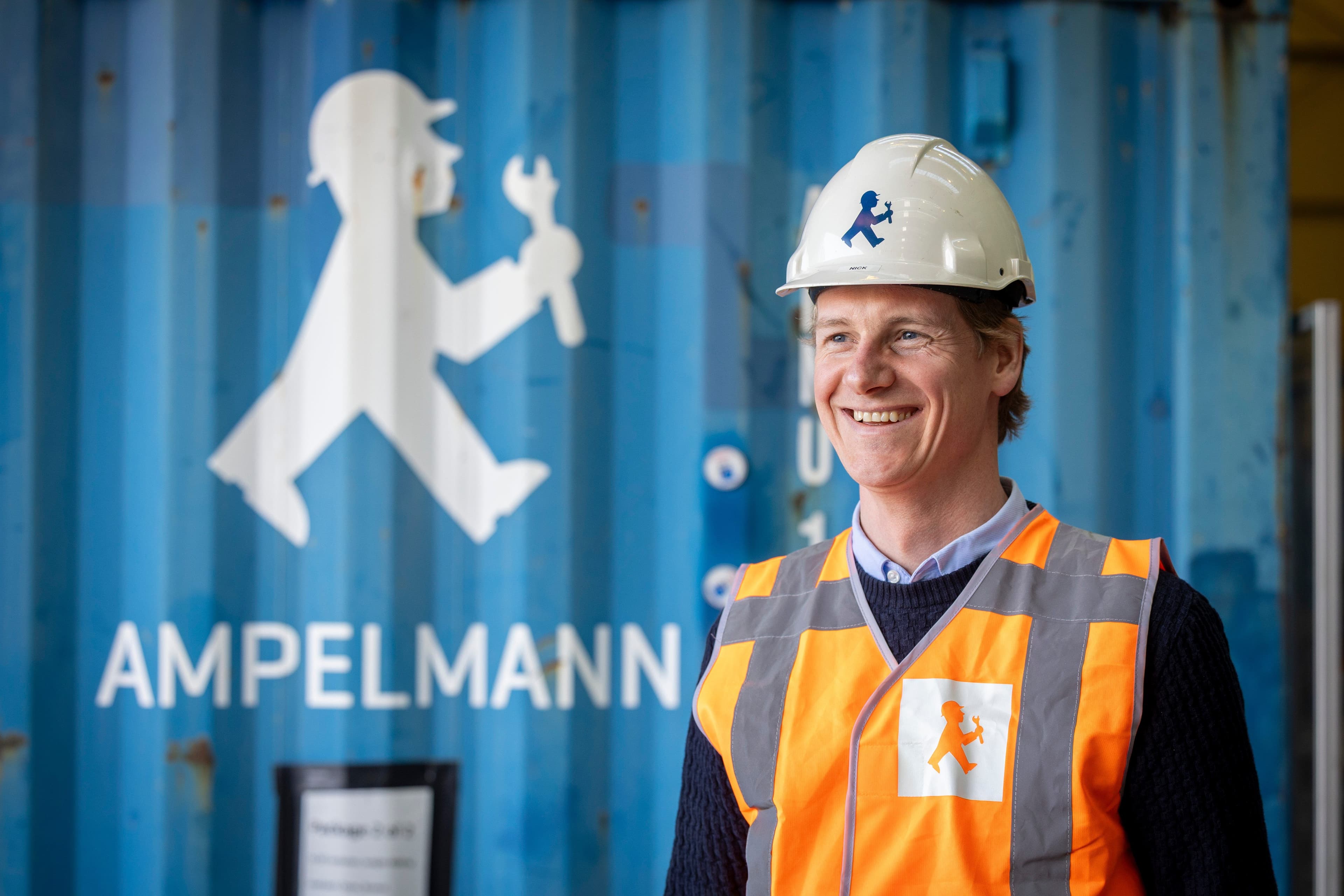
Within Ampelmann, De Lange started out in the operations department. As a project manager, he ensured that the gangways, advanced walk-to-work bridges connecting vessels to offshore locations were installed and kept operational around the world. “It was my responsibility to make sure our system arrived at the right place, was properly installed, and continued to function,” he explains. “And if something broke, it had to be fixed quickly.”
His career then took him abroad. In Qatar, he helped set up a new office, and in Singapore he spent four years leading the Asian operation. A few years ago, De Lange returned to the Netherlands, where he now focuses on Ampelmann’s innovative future.
A safe crossing
Ampelmann was founded in 2002 in response to a simple yet persistent problem: how can technicians safely access an offshore wind turbine?
Previously, this was often done using small boats that pushed up against a ladder. In higher waves, this quickly became dangerous. Another option was a helicopter—safe, but extremely expensive.
During an offshore wind energy trade fair in Berlin, the idea for an alternative emerged. A wind turbine stands firmly in the water. A gangway could create a connection between the vessel and the turbine by pushing against it. But the vessel, on which the gangway is mounted, moves with the waves. And so the idea arose to compensate for the vessel’s motion.
The name came about almost by coincidence. In Berlin, the founders saw the well-known pedestrian traffic light figure: the Ampelmann. The comparison was quickly made, crossing from a vessel to a wind turbine should become as easy and safe as crossing the street. The codename stuck and became the name of a globally innovative technology company.
Smart walkways at sea
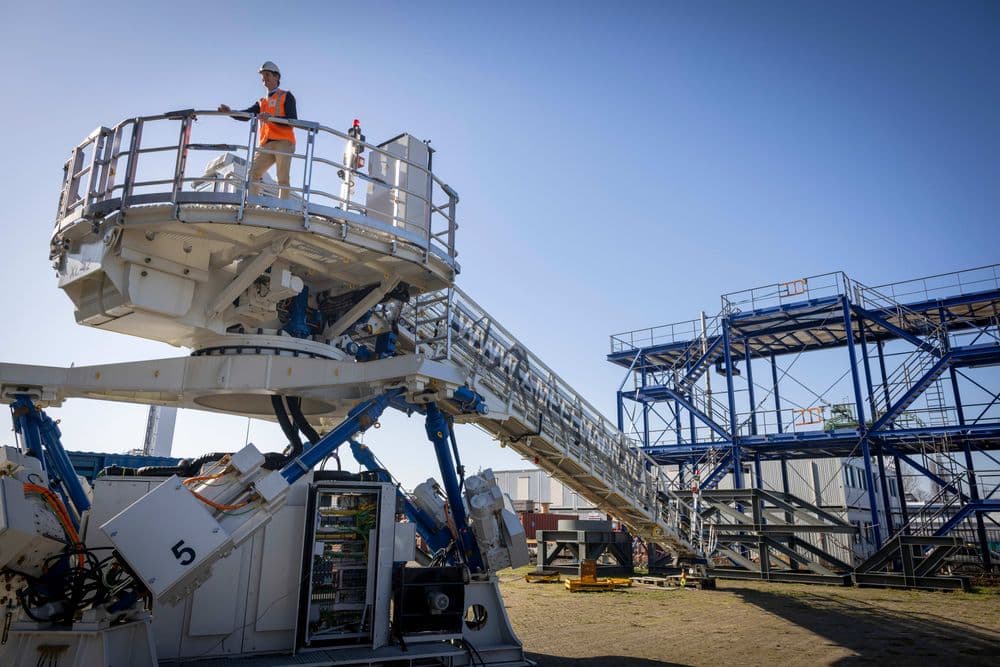
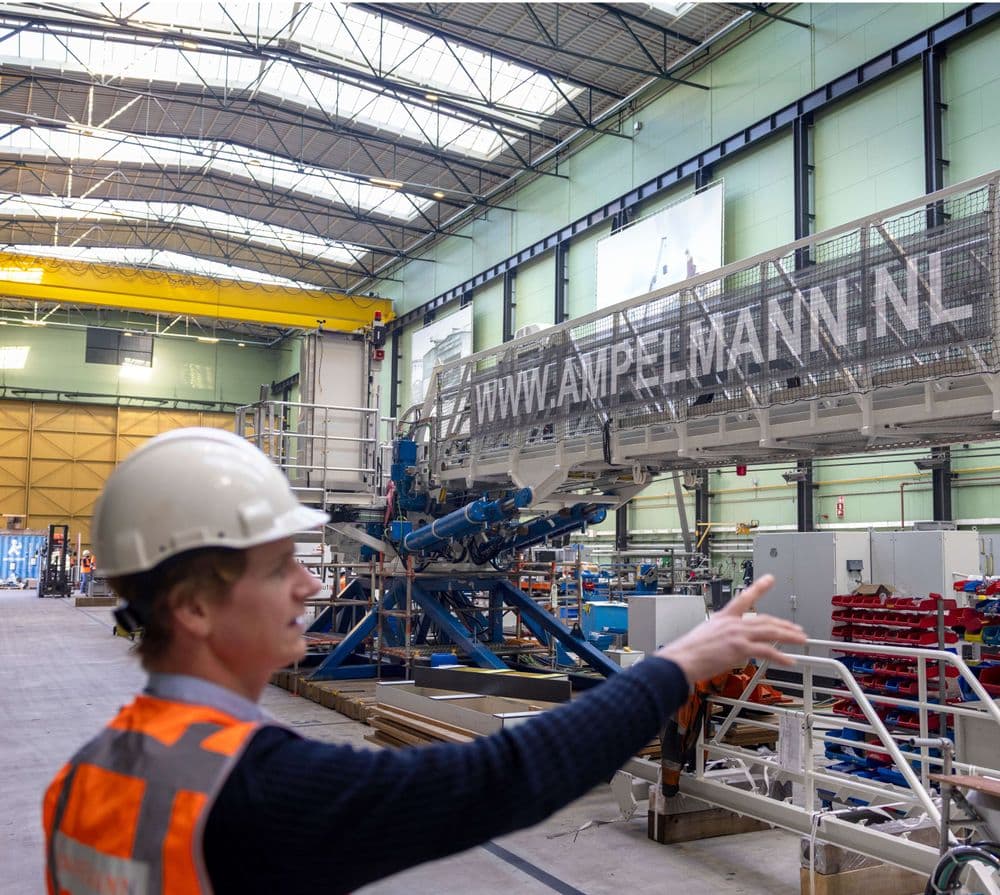
Ampelmann develops systems that automatically compensate for a vessel’s motion. As a result, the gangway between the vessel and the installation remains stable, even in rough seas.
The principle is easy to explain, says De Lange: “While the vessel moves with the waves, cylinders continuously adjust the system. This keeps the end of the gangway still relative to the wind turbine or platform.”
Ampelmann provides not only the technology but also the service around it. “Uptime for our customers is essential,” De Lange says. “We don’t just sell a system, we make sure it keeps working. That can mean supplying operators and offering 24/7 support.”
Growing up at RDM
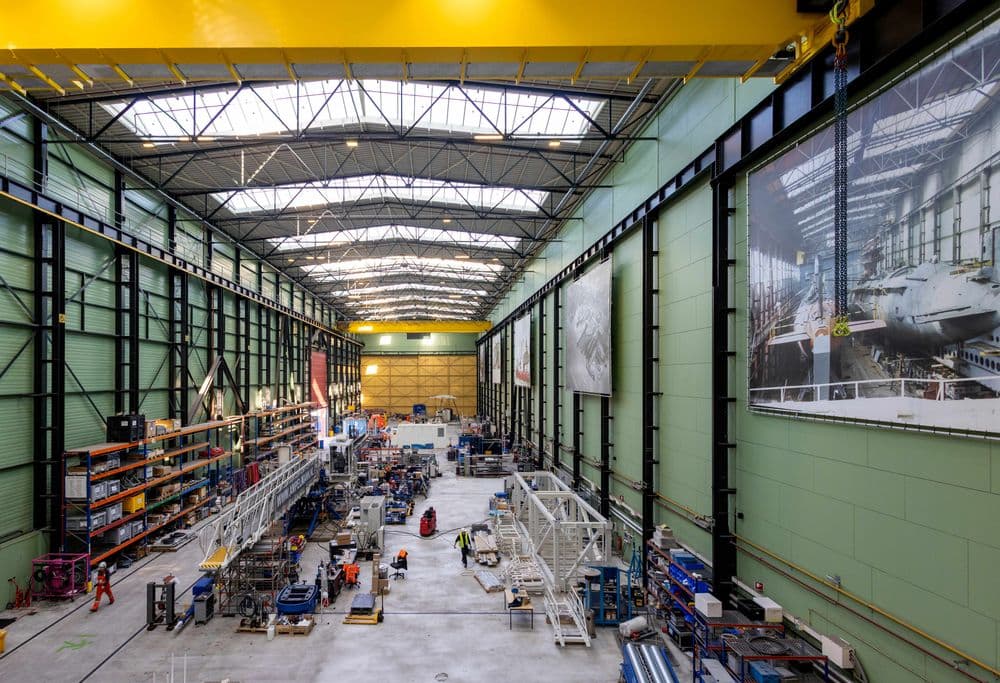
Ampelmann began its production at RDM Rotterdam, in the Innovation Dock. This is where the first systems were built and tested.
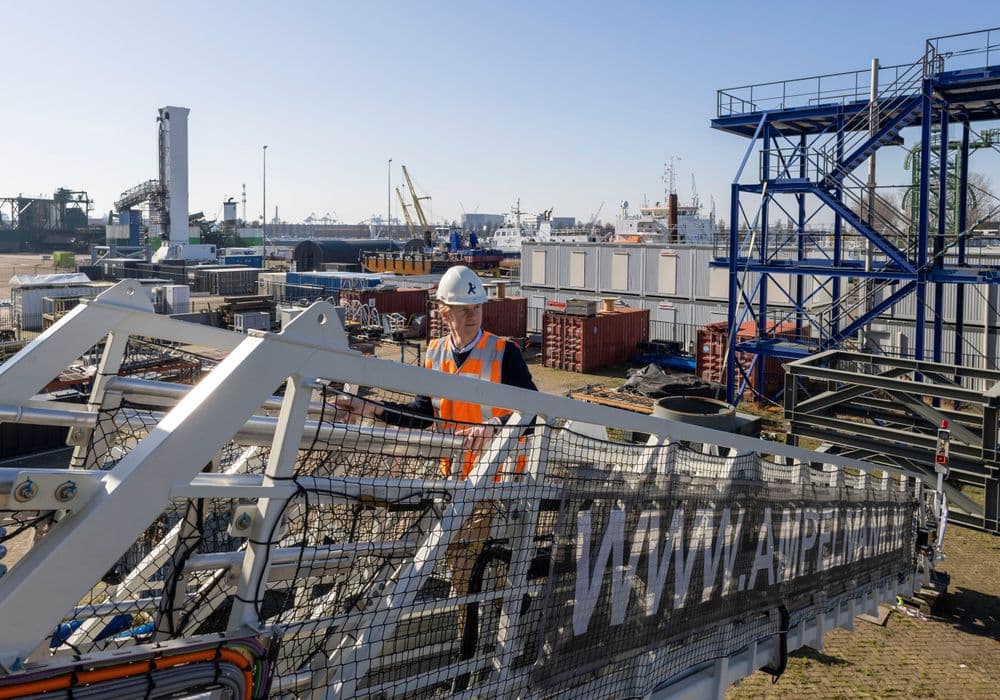
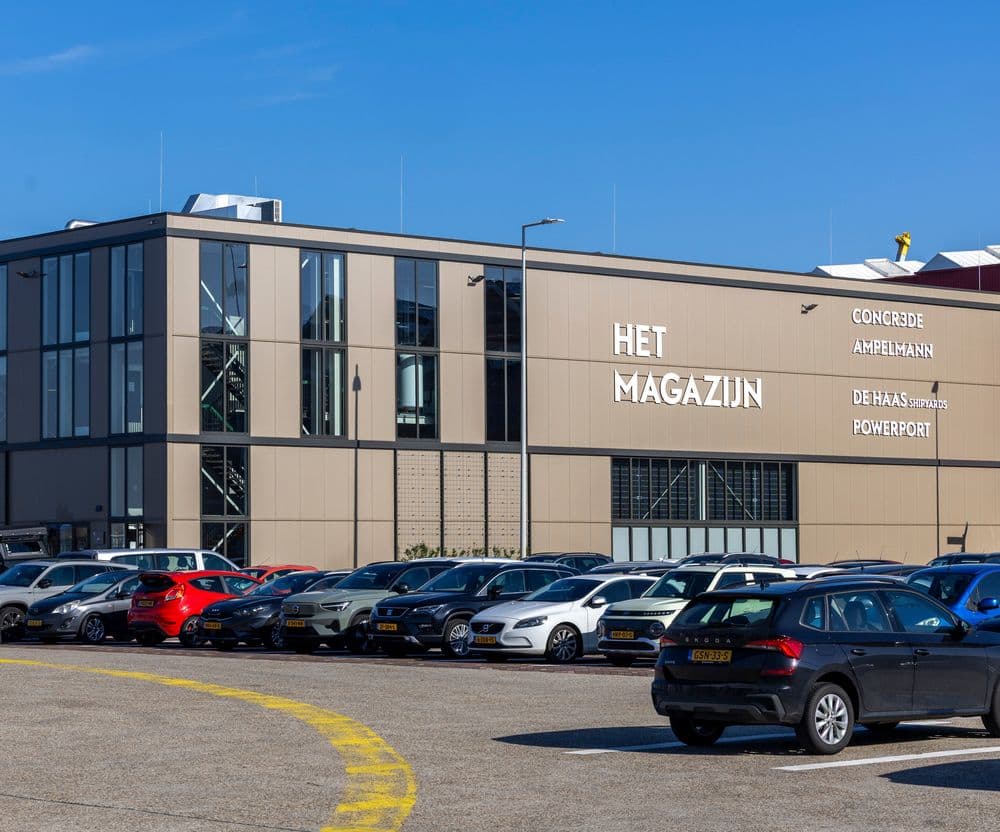
But the company grew quickly. Production first moved to the Onderzeebootloods and later expanded into the newly completed Magazijn. Today, Ampelmann has offices, workshops, and a global distribution hub at RDM Rotterdam.
“At a certain point, we simply outgrew our space,” De Lange recalls. “The Port Authority worked with us and created room for us to continue expanding.”
He still sees the RDM site as a place where technology companies can thrive. “Start-ups here get the facilities to begin and grow, exactly as Ampelmann did.”
Leading the way in innovation
As Innovation Director, De Lange focuses on the next generation of systems. A key development is electrification. Ampelmann was the first in the sector to switch to fully electric systems. At the same time, the company is working hard to reduce energy consumption. By recovering energy during motion, energy use has been reduced by around 80 percent.
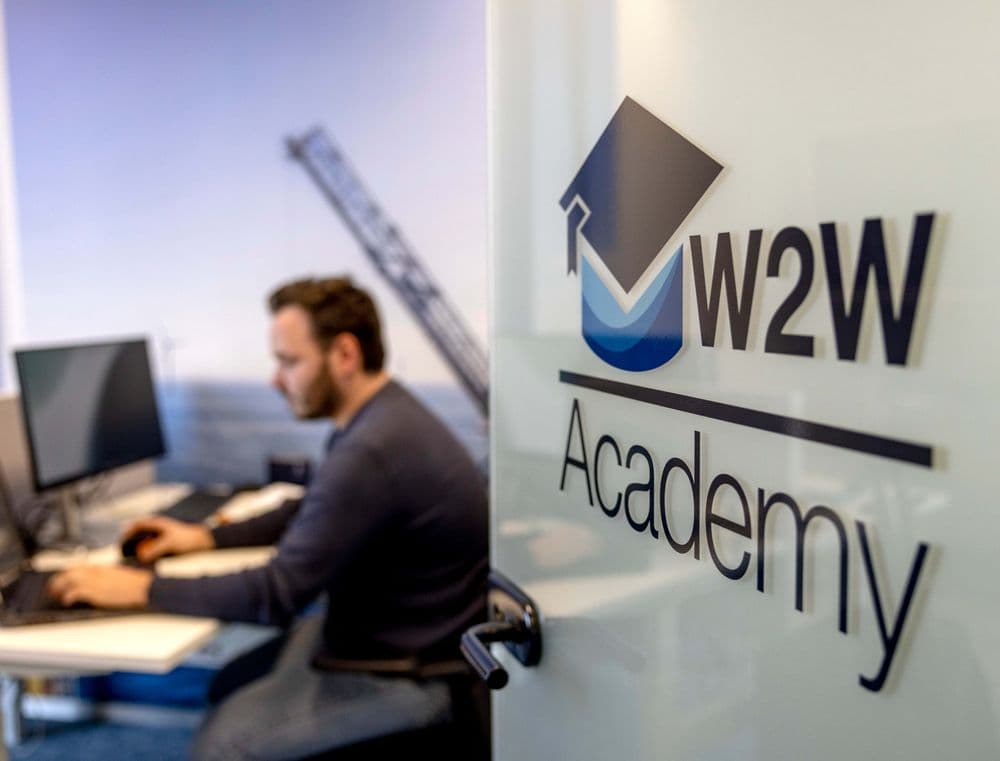
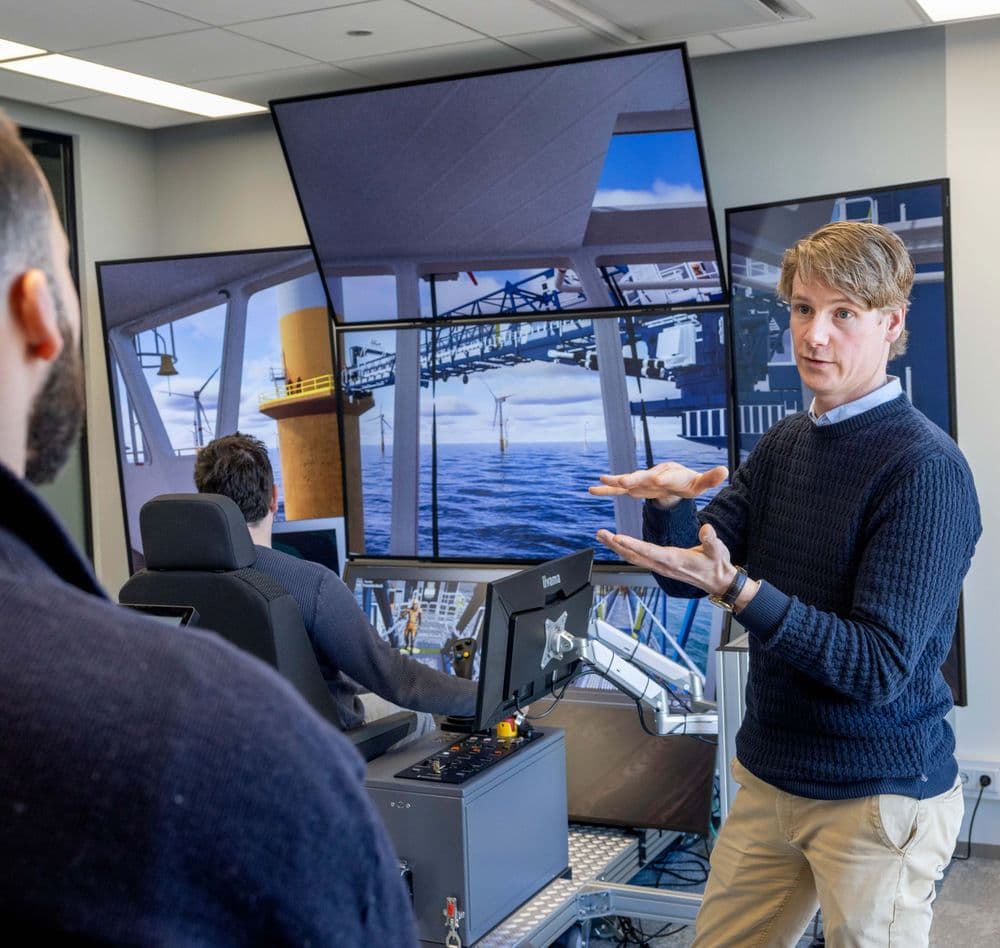
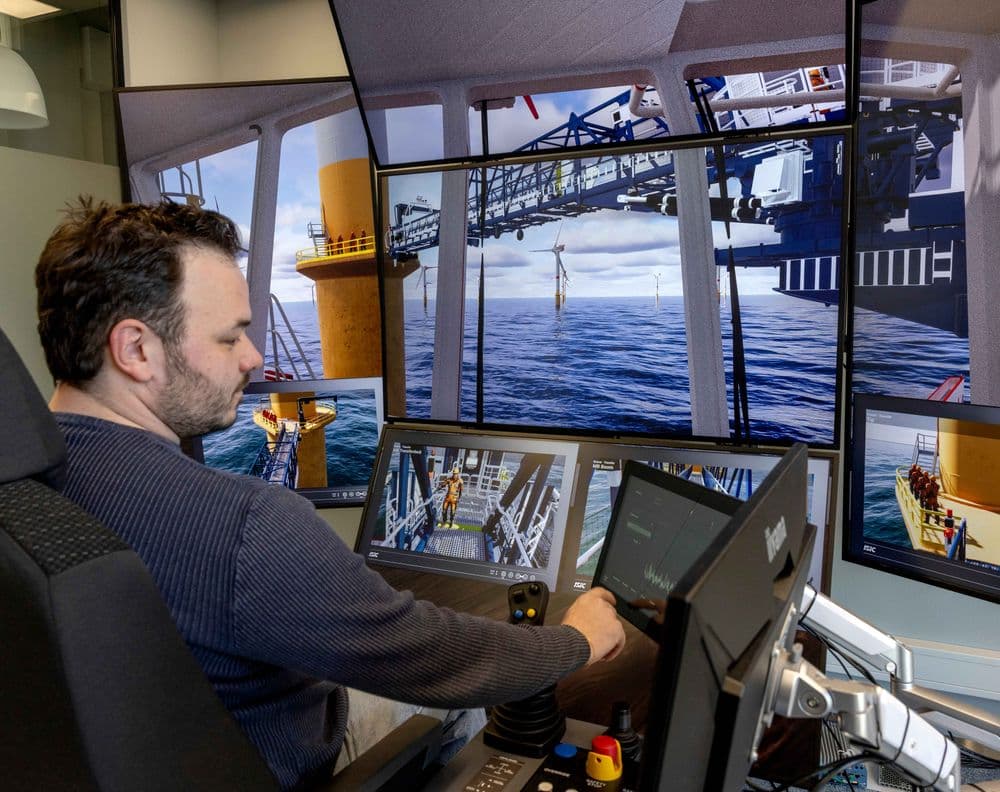
There is also significant innovation in continuous staff training and system improvement. “On one hand, we want to train and refine our systems so that we can offer autonomous operations in the future,” De Lange says. “Just as cars are becoming more self-driving, we want to develop systems that can automatically land.” Space on vessels is limited and personnel is expensive. More automation allows better use of available capacity. “On the other hand, we place enormous value on skilled personnel. Until autonomous operations are safe enough, we train our staff with highly advanced simulators. That way, they are prepared for anything and ensure safe operations for our customers.”
The future: autonomous and modular
For the coming years, Ampelmann has a clear innovation agenda. The company works with an innovation roadmap in which technological developments and market needs come together.
According to De Lange, one principle remains central: listening to the customer. “Innovation starts with the customer,” he says. “It begins with understanding what customers need. If you solve the wrong problem, it doesn’t matter how innovative your solution is.”
“But once we’ve mapped out those challenges, we’re always looking for great engineers to help us continue developing and growing. Because Ampelmann is far from finished at RDM Rotterdam,” Nick assures.
Photography: Eric Fecken