RDM Rotterdam
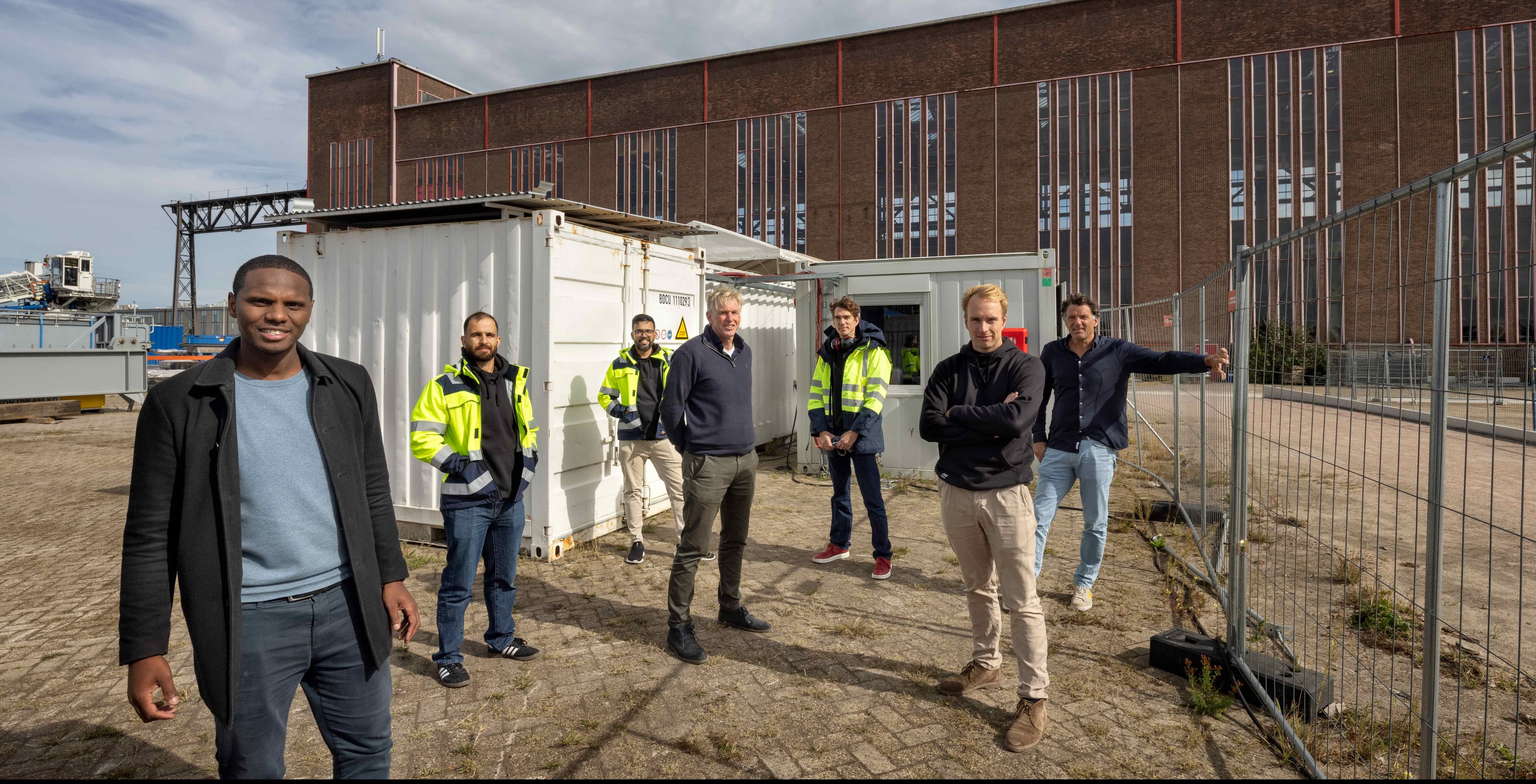
The shared drive? “Building something that truly makes an impact.”
The three founders knew each other from previous start-ups and decided to take on something big and difficult together. “Not necessarily because it will make us rich, but because the world needs it”, Jan says. The idea took shape when he attended a lecture by Nobel Prize winner Steven Chu. “Work on liquid fuels made from sun and wind,” Chu urged. They couldn’t shake that call.
From dream to company
They founded ZEF in 2017, but the groundwork had been laid earlier. “We started with a thorough analysis of the market, the technology and the risks”, Ulrich explains. “Only once we knew what we wanted and how it could be feasible did we truly begin.” From their base at TU Delft, they quietly developed their technology, deliberately staying under the radar for years. Together with dozens of student teams, ZEF designed prototypes — without investors, but with a clear mission: to make sustainable fuels radically cheaper.
In 2025, ZEF moved to Rotterdam and settled into the Innovation Dock at RDM. “We were welcomed with open arms”, Ulrich says. “From the Port Authority to the DCMR Environmental Protection Agency: everyone thought along with us, ensured a soft landing, and made further development here possible.”
What does ZEF do?
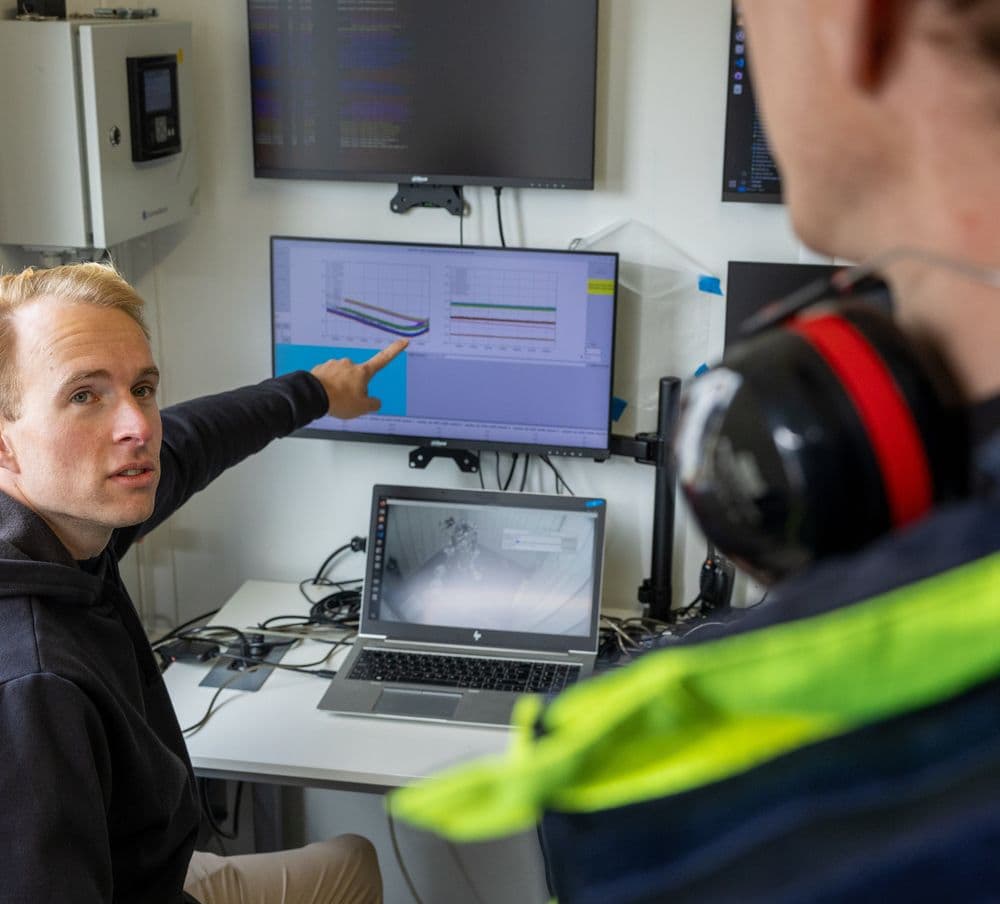
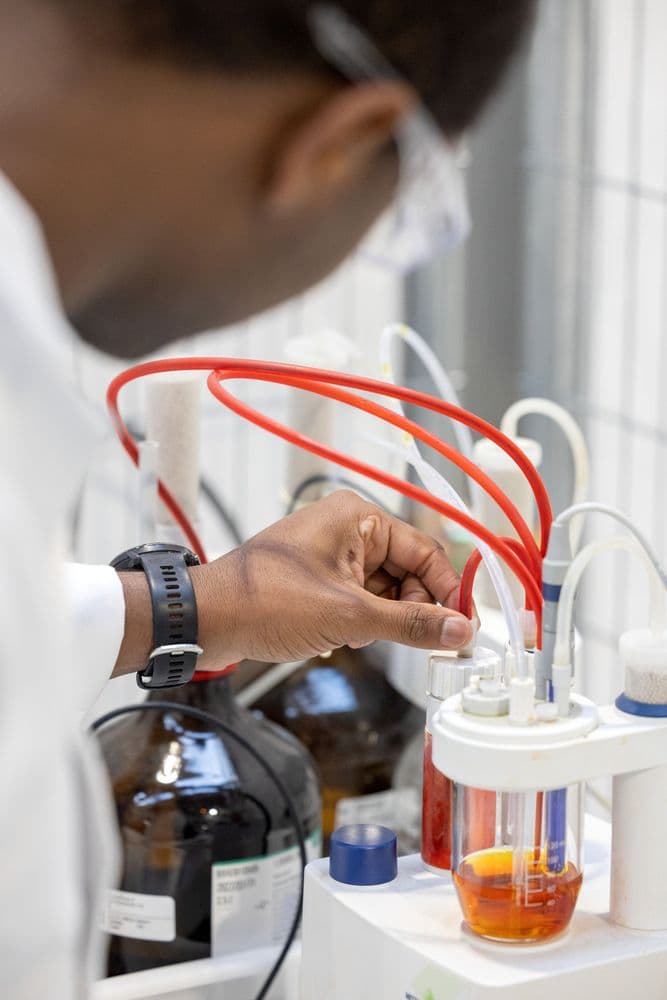
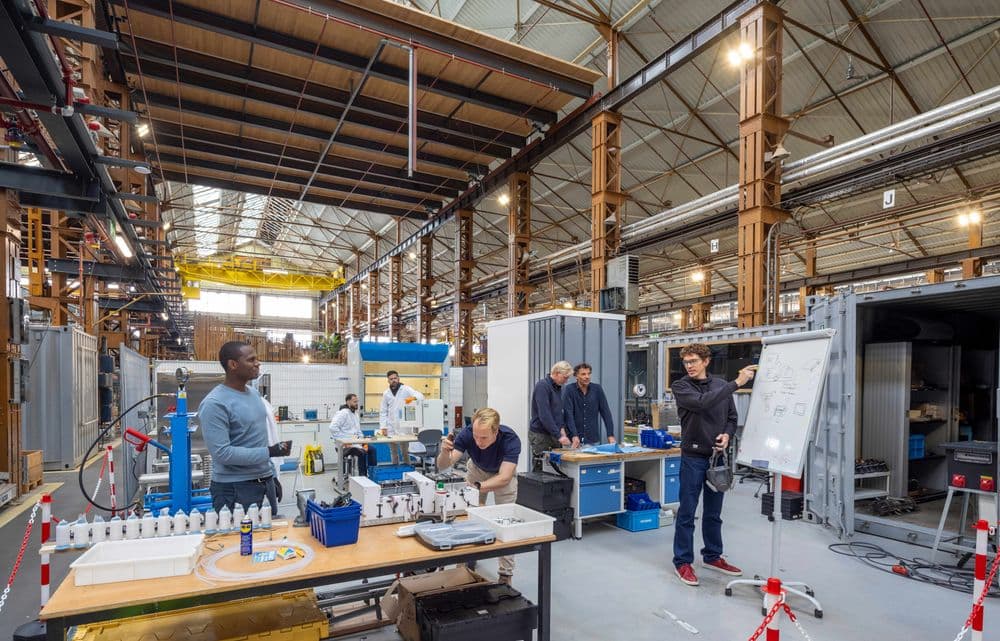
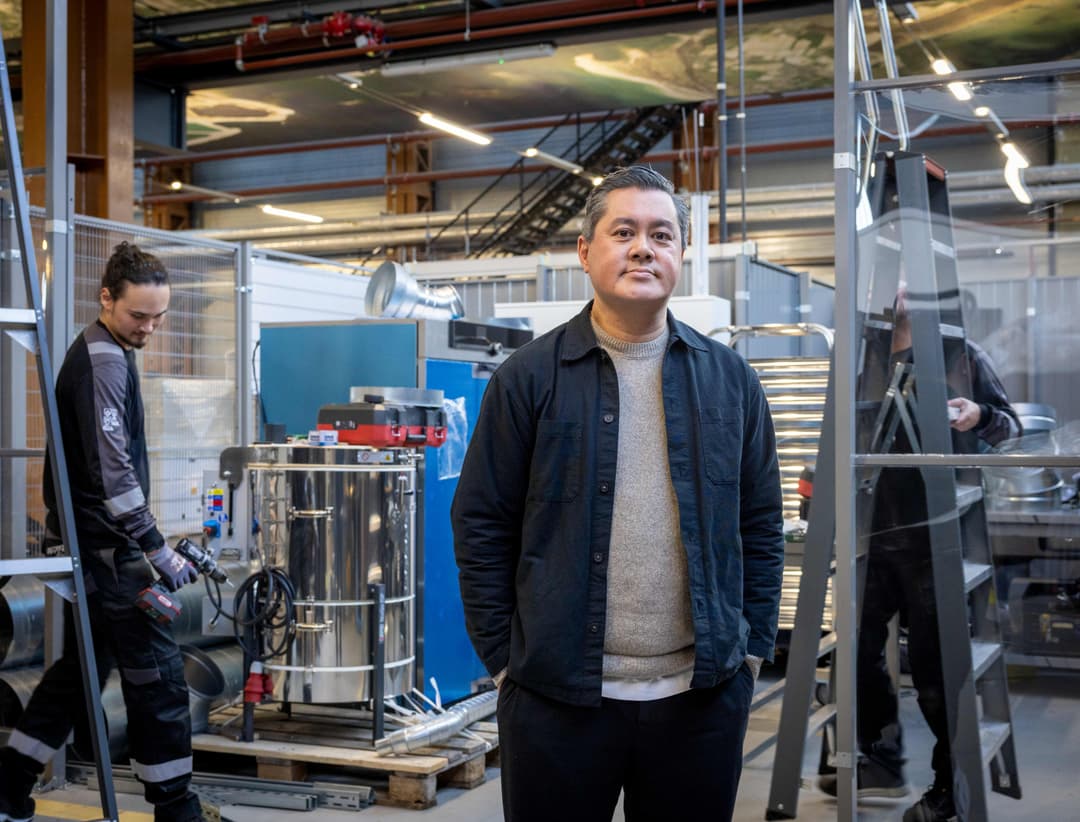
ZEF develops modular systems — “kind of small units.” Each unit has its own function: capturing CO₂ and water from the air, splitting water into hydrogen, and converting hydrogen and CO₂ into methanol. The systems run entirely on solar energy, without grid connection or batteries. “Our first product will be the hydrogen module, and the full air‑to‑methanol combination is the long-term goal. Methanol is a liquid fuel that’s easy to transport and can be used in existing infrastructure,” Jan explains.
What makes ZEF unique is their approach: instead of building one large plant, they create small-scale modules that can be mass-produced. “Like solar panels: not one big central system, but hundreds of thousands of panels. That’s how we approach fuel production”, Jan says.
Innovative and scalable
The core of ZEF’s innovation lies in thinking in terms of products rather than projects. “The traditional chemical industry builds prototypes that cost billions. We build devices for a fraction of that price”, Jan says. This drastically reduces costs and risks.
The first systems are now being prepared for the market. “Our hydrogen module is the most advanced,” Jan explains. “There’s demand for it in industries that are hard to electrify, such as refineries and cement production.” The modules are designed for deployment in sunny regions around the world — from Portugal to the Sahara.
The strength of RDM
For a technology centred on safety, process engineering and energy, the RDM site turned out to be ideal. “People here understand what we’re doing. They’re not scared of the word ‘hydrogen’. In fact, they know how to work with it and how to keep it safe,” Ulrich says. “We received excellent support from the Port Authority and had direct lines to regulators like DCMR. And on top of that, we’re surrounded by big, friendly neighbours like De Haas, where we draw power from and occasionally borrow a forklift.”
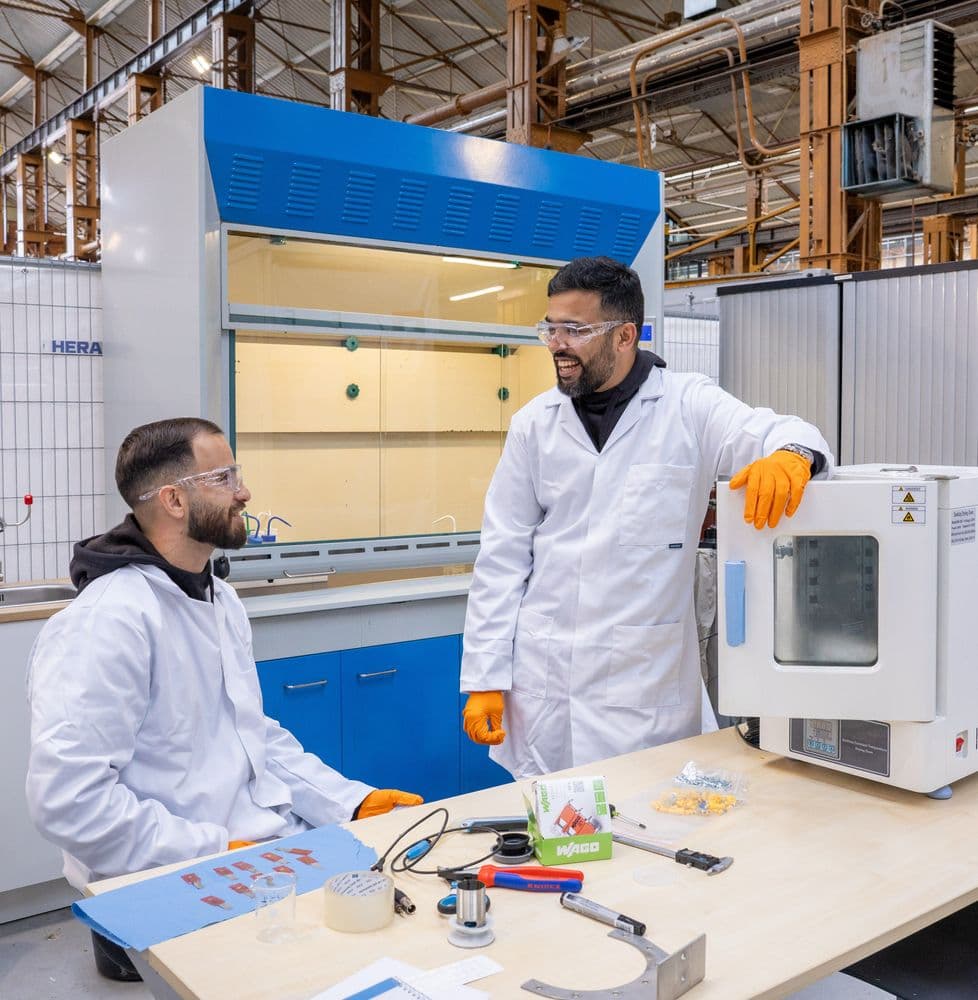
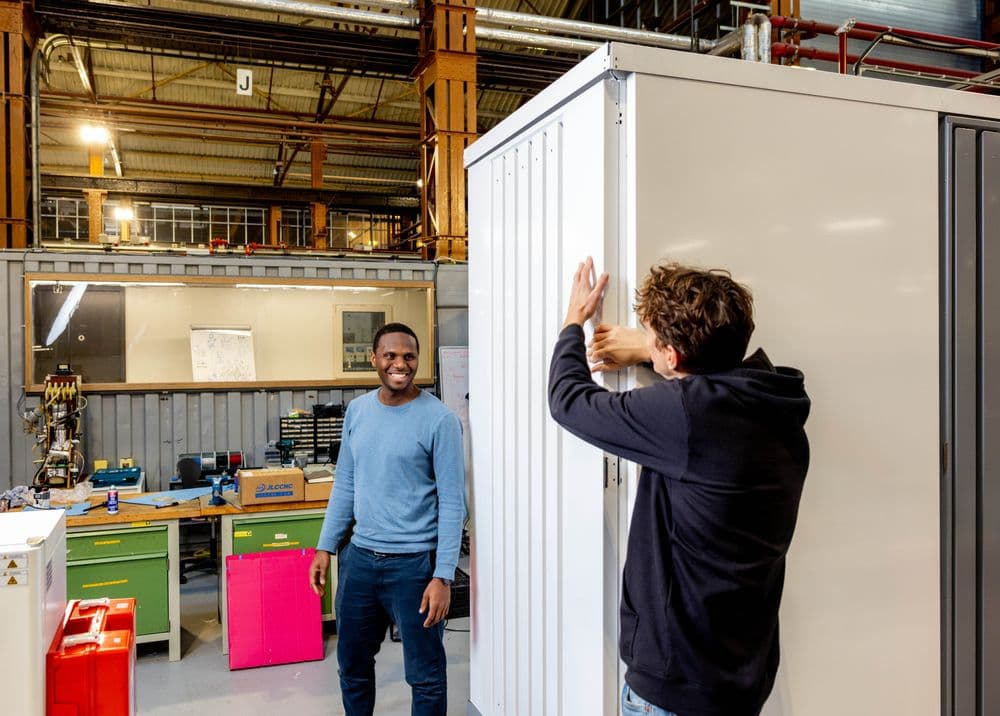
ZEF operates both in the Innovation Dock and on an outdoor lot, alongside other innovative companies such as Ampelmann and Paebbl. “The vibe here is: ‘don’t talk, just build.’ And that fits us perfectly”, Jan says. ZEF now shares its knowledge, facilities and even safety protocols with nearby companies. “Without these neighbours and institutions around us, our landing wouldn’t have been nearly as smooth.”
A look into the future
ZEF currently works with a core team of six employees and the three founders, supported by small student teams. In ten years, the company has built an impressive portfolio — without external investors. “We achieve a lot with very little”, Jan says. “And we enjoy it. Our partners love working with us.”
The dream? “A few gigawatts’ worth of units in a solar valley, producing the world’s cheapest sustainable fuel”, Jan says with determination. “We won’t settle for less.” Still, caution is needed: “Investment appetite in the Netherlands is tough. We’d love to keep building here. But if that doesn’t work, other countries are waiting.”
ZEF’s ambition is clear: innovate in Rotterdam, scale for the world, and make the energy transition affordable. Or as they put it themselves: “Get shit done.”
Photography: Eric Fecken